
Family Law

  • Can I Have Custody of My Child in New Hampshire?

    For a very long time, “custody” and “custodial rights” or “visitation” were words used to describe a parent’s right to spend time with their child. One parent would often have “primary custody” and the other parent would have “visitation.” On rare occasions, the parents would have “joint custody.” Since 2005, New Hampshire has stopped using the words “custody” and “visitation”. Instead, those words have been replaced with the more generic term: parenting rights and responsibilities. As defined by statute, parenting rights and responsibilities are “all rights and responsibilities parents have concerning their child”. (RSA 461-A:1, V). Any provision in the law that refers to “custody” of a child now means the allocation of parental rights and responsibilities pursuant to RSA 461-A. (RSA 461-A:20). Not only…

  • |

    What is a Partition and How Do I Know if I Have Equity?

    Imagine the following situation: a couple gets engaged, but before the wedding, decides to buy a house to live in together, planning to live in the house before the marriage and after. Things go well for a time, but then the relationship falls apart and the engagement is off. Now the couple is left with the issue of what happens with the house. The answer lies with a petition to partition. At the outset, it is important to remember that if the marriage had gone through and the couples were divorcing instead of breaking off an engagement, the fate of the house would be decided by the Family Court in the divorce. Second, it is important to remember that any mortgages or other liens against…

  • What is a No-Contest Divorce and Why Do I Need an Attorney?

    While all divorce agreements must be approved by the Family Court to be enforced, not all divorces end up in litigation. In fact, many divorces in New Hampshire do not even have lawyers. In New Hampshire, a “no-contest” or “uncontested” divorce informally refers to a divorce by agreement. In these cases, the Court will approve the parties’ requests (property division, support orders, parenting plan, etc.) without engaging in litigation. Plainly, an uncontested divorce occurs when the parties agree upon the terms of their permanent separation. As mentioned, many divorce decrees are “do-it-yourself” divorces. In these situations, parties that agree that their marriage reached its natural end. Therefore, the parties put together an agreement from the Family Court’s online forms and checklists, and submit the agreement…

  • Should I have a Prenuptial Agreement?

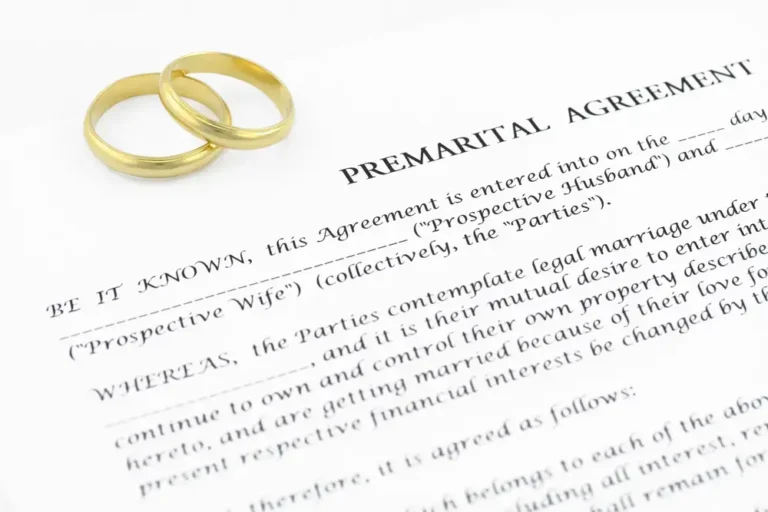
    This blog was originally published at Collaborative Divorce New Hampshire by Cathy McKay A Prenuptial Agreement is a written contract entered into before marriage that will determine how assets and debts will be divided, in the event there is a death or divorce. The Court will enforce Prenuptial Agreements if there is a death or a divorce as long as the Court finds that the agreement was entered into fairly, giving both parties sufficient time and information to understand how the law may impact the agreement and their fiancé’s assets and income before signing. In addition, the Court will also need to find that the parties’ circumstances have not changed since the agreement was signed in some significant way to make the agreement unenforceable. Potential…

  • |

    Can I Get Alimony in Divorce?

    When clients come in to talk with us about divorce, we are often asked whether they can get alimony or “spousal support”. Contrary to child support, alimony is intended to support the spouse. It can be ordered in those cases in which one spouse has “need” and the other spouse has the “ability to pay”. “Need” does not mean poverty, but instead, “need” considering the standard of living the parties had during the marriage. Likewise, “ability to pay” also must consider whether that spouse can pay alimony to the other spouse and still meet his/her own needs considering the standard of living the parties had during the marriage. This often requires the Court to perform a balancing test, comparing the income versus expenses of both…

  • |

    How to Find the Right Attorney for You?

    Over a month ago, Newsweek ran an article that discussed one woman’s divorce experience. After a long-term marriage, the author compared her experiences to the five stages of grief. However, she found grief too elegant of a term. Instead, she likened the divorce process to “feeling like a contestant on Wipeout: completely battered, generally off balance, and surrounded by utter chaos.” In her recollection, the author discusses feeling grief, exuberance, blame, sadness, hate and ultimately, indifference. Divorce attorneys are all too familiar with these emotions and more. However, how do you know when you have found the right attorney for you? Any divorce attorney will understand that divorce is a hurricane of emotions. However, a good divorce attorney will serve as a mooring in that…

  • |

    How Will Our Retirement Assets Be Divided in Divorce?

    When clients come in to talk with us about divorce, we are often asked many questions about retirement assets. Often, only one spouse has retirement assets and the other spouse is concerned that he/she will lose the right to a share of those assets if they get divorced. This is often the case with a stay-at-home parent, who gave up his/her career to raise the parties’ children. We hear from many of these potential clients that their spouse told them they had no right to their retirement assets if they get divorced because he/she did not contribute anything to those assets. This is simply not true. In New Hampshire, all assets are “marital assets”. This includes assets that are titled to one spouse individually and…

  • | |

    I Asked for a Divorce, Now What?

    This article was written by Cathy McKay and originally published at Collaborative Divorce New Hampshire. Many clients who come in to see me for a divorce ask me this very question: “I’ve told my spouse that I want a divorce, but now what do we do?” The answer is that once you have made the decision to get divorced, you need to decide how to proceed. This means that you need to decide what type of divorce process you want. One option, and the one most known, is the option to file a Petition for Divorce with the Court. This will open a case with the Court and will require the parties to then follow all Court rules, participate in several hearings, and ultimately, a…

  • Home Ownership and Divorce – Family Law

    In many divorces, the party’s main asset is the marital home. Therefore, one of the questions we hear the most in family law is “what’s going to happen to my home?” For some, this is a purely financial question. For others, there is a great deal of emotional attachment with concerns about the party’s children and their own future living arrangements. For most, the parties generally agree that there should be equal division as equitable compensation, but the question is how that is accomplished. This blog post will cover the parties’ options in dividing the marital home. Option 1: Sell the Home This is the “cleanest” option and allows both parties a fresh start, as well as provides the most financial return to each party….

  • Grounds for Divorce in New Hampshire

    Persons getting divorced in New Hampshire have a choice to make on the grounds for divorce. New Hampshire is considered to be a no-fault divorce state as neither party is required to prove specific grounds to get divorced. The petitioner needs to simply state that irreconcilable differences have caused the irremediable breakdown of the marriage. (NH RSA 458:7-a). This means that the marriage is broken down and cannot be repaired. These no-fault grounds for divorce are by far the most common grounds alleged to get divorced in New Hampshire. It is also possible to get divorced in New Hampshire based on specific fault grounds for divorce. (RSA 458:7). Those fault grounds include: Adultery Extreme Cruelty Treatment by one spouse that seriously injures the health of…